





I recently followed an in-depth technical discussion on laboratory workflow optimization that cited a striking figure from the American Society for Clinical Pathology (ASCP): the methodical elimination of waste and rework from daily operations can reduce a laboratory's operating costs by up to 20%.
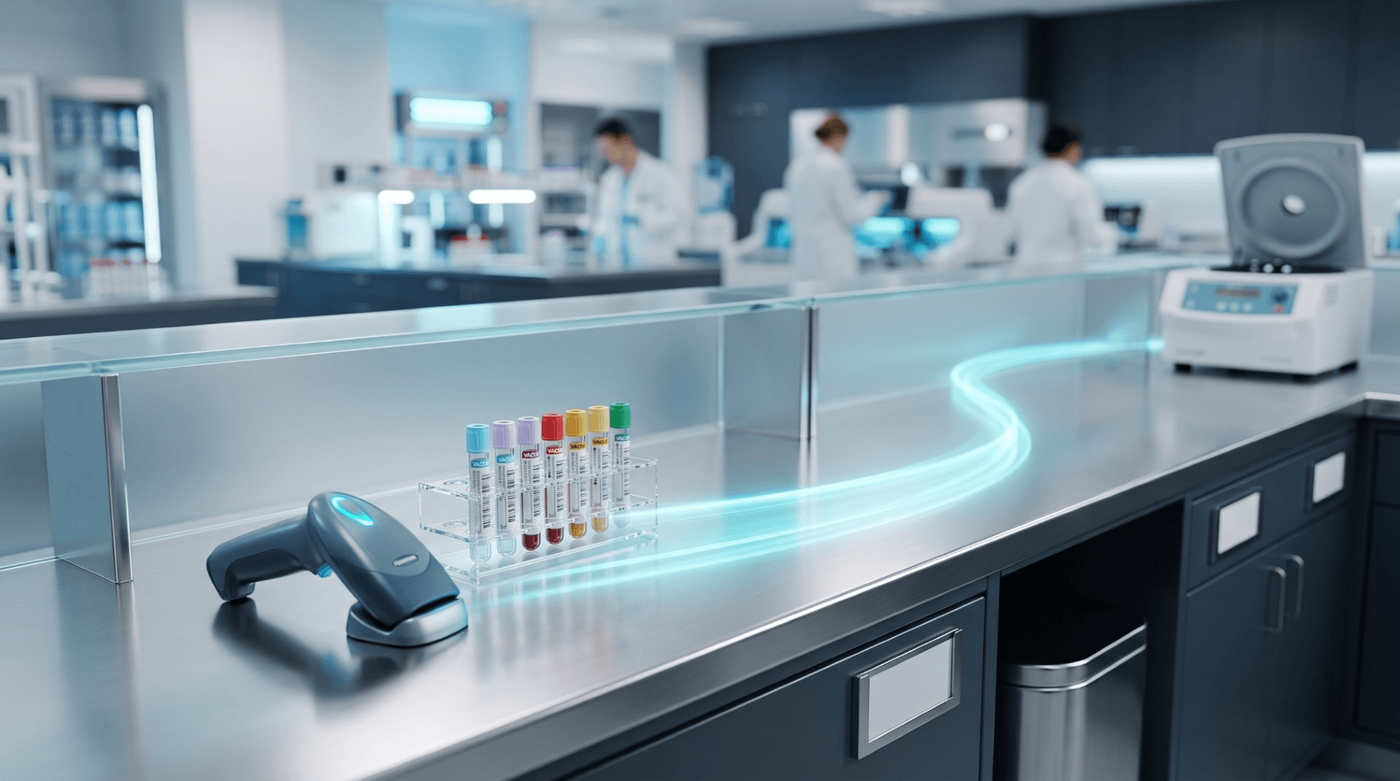
However, in clinical practice, the financial cost is merely the visible tip of the problem. The greatest risk associated with an operational failure during collection is its **ripple effect**.
Wird eine Blutprobe außerhalb der Standardvorgaben, mit unzureichendem Volumen oder falsch beschriftet entnommen, beschränken sich die Folgen nicht auf den Probenentnahmeraum. Diese geringfügige Abweichung verzögert das Screening, blockiert den Analyseprozess, erfordert eine erneute Probenentnahme und verzögert letztendlich wichtige Therapieentscheidungen – wie beispielsweise den sofortigen Beginn einer Antibiotikatherapie bei einem septischen Patienten auf der Intensivstation. Jede Minute, die in der präanalytischen Prüfung verloren geht, ist kostspielig für den klinischen Verlauf.
Where Lean meets the collection room
Applying the Lean methodology and the 6S program in healthcare aims to map the value stream to strictly retain elements that enhance patient safety, while eliminating redundant steps and sources of manual noise.
At Greiner Bio-One, when designing the architecture of eTrack, we applied this principle directly to the very start of the process:
- Elimination of Wasted Movement and Manual Checks: Professionals do not waste time consulting physical charts or checking manual lists to determine tube sequencing and homogenization rules. The system intuitively guides the workflow on the screen.
- Drastic Reduction in Manual Work (Hands-on Time): Validating collection parameters at the exact moment of the draw avoids late re-checks at the analytical bench.
- Process-Embedded Safety: A digital lock prevents non-compliant samples from leaving the collection room. Non-conformity is halted at the source, before it can contaminate the laboratory value chain.
Industry 5.0: Technology at the service of people
There is much talk about automated conveyors and robots, but the real transition we are experiencing today is toward human-centric automation. Technology does not replace the picker's judgment; it acts as a protective shield against cognitive overload and operational error.
Shielding the collection room with smart, paperless processes is the first step toward a truly Lean, safe, and efficient laboratory.
A hug,
Leonardo Lippel Rodrigues
Sales and Technology Manager