





One of the most insightful points recently discussed at international clinical pathology events is the concept of the "Brain-to-Brain" cycle (from the requesting physician's mind to clinical decision-making based on the report).
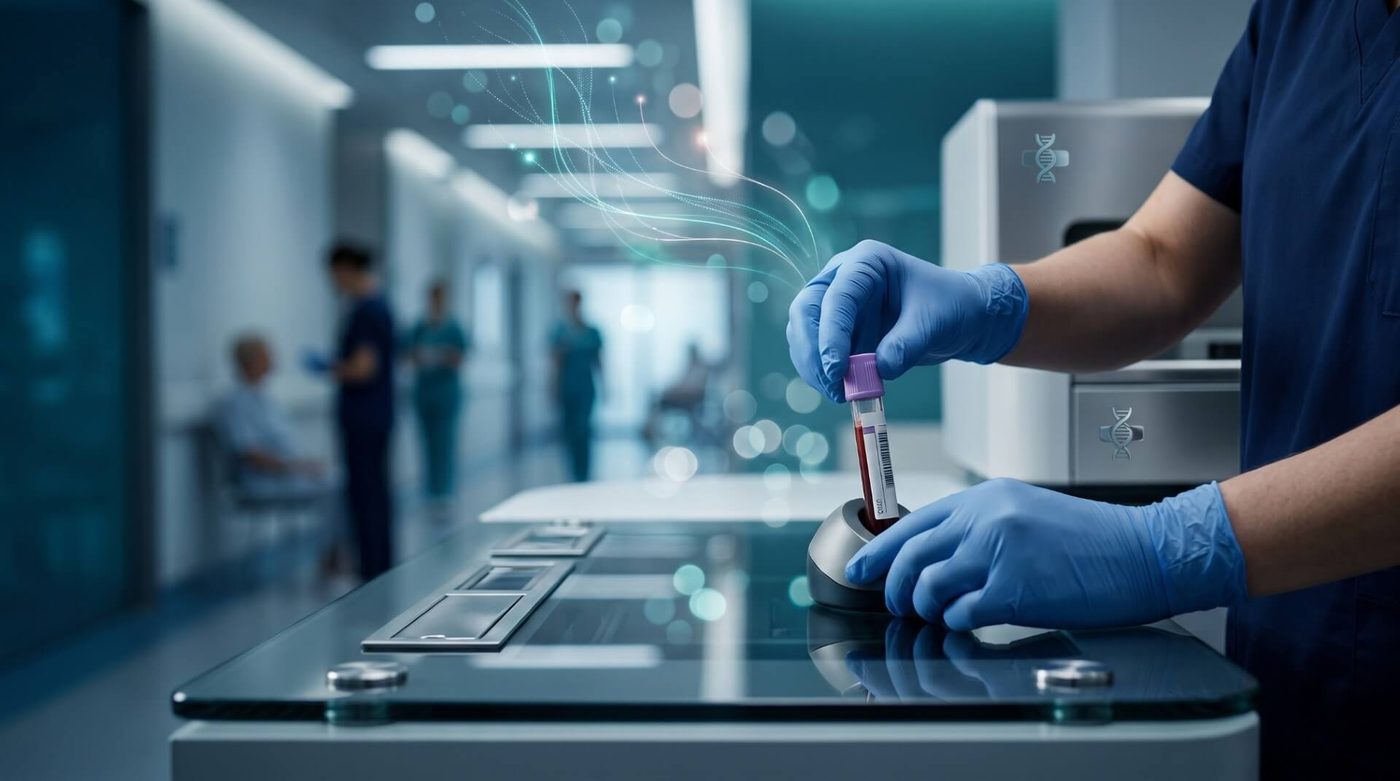
The experts’ conclusion is unanimous: **automation within the laboratory's technical area has already reached a very high level of maturity.** Modern analyzers have very low error rates. The real bottleneck—and where more than 70% of errors occur—lies in the stages taking place outside the automated tracks: the medical order and, crucially, the sample collection process.
If the data generated in the collection room is flawed, all the LIS's analytical intelligence and algorithms become useless. As the classic data science principle goes: *garbage in, garbage out*.
Data integrity at the source (ALCOA+ principles)
There is much discussion regarding data governance and cybersecurity in hospital systems, yet we often overlook the fact that the integrity of clinical information begins at the moment of venipuncture. Ensuring that a sample is traceable and attributable to the specific patient requires moving away from loose papers, spreadsheets, and informal notes.
When developing eTrack at Greiner Bio-One, we designed a solution focused on ensuring accuracy at the point of care:
- Real-Time Validation with the LIS: Electronic bedside or collection-station verification ensures that the correct tube is scanned for the right patient, eliminating sample mix-ups and sorting errors.
- Traceability: Every action during collection is digitally linked to the operator, date, time, and batch, rigorously meeting governance audit and accreditation requirements (such as PALC and CAP) without necessitating bureaucratic rework.
Connecting the dots to save lives
The competitive edge in diagnostic medicine today lies not only in the speed of the analytical workflow but in the ability to integrate care from start to finish with absolute reliability.
A flawless analytical phase requires a fail-safe pre-analytical phase. When you digitize and secure the collection room, you protect the entire diagnostic ecosystem.
How does your laboratory ensure data integrity before the tube reaches the analyzers?
A hug,
Leonardo Lippel Rodrigues
Sales and Technology Manager